Home / Products and services / Eyed trout ova
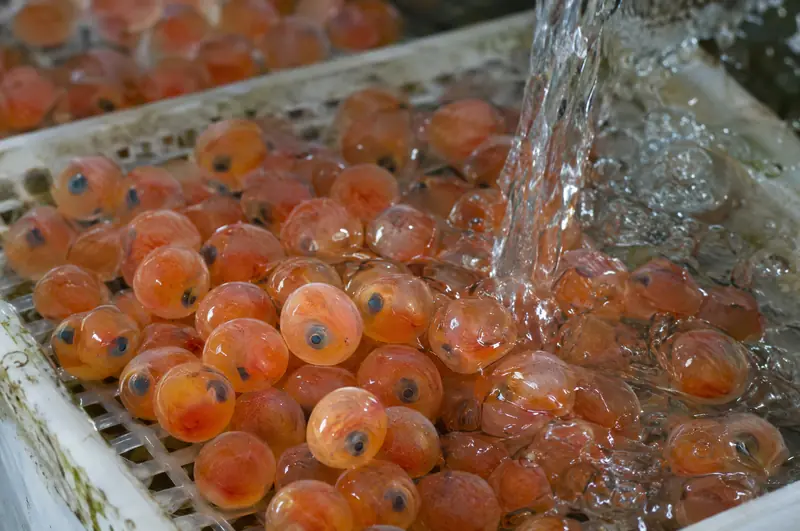
Eyed trout ova for hatcheries that incubate their own fish
Eyed rainbow trout eggs, packed cold for the trip, for farms and hatcheries that already run incubation. If you do not, fingerlings are the better buy.
- Fish health checked before every dispatch
- Stocking advice with every order
- You speak to the people who raise the fish
- Delivering to Dullstroom
Trout ova for hatcheries, not for dams
Stillriver Trout Breeding Centre incubates rainbow trout eggs in its own hatchery. We sell eyed rainbow trout ova to other hatcheries and trout farms that run their own incubation and want to grow their own fingerlings.
We want to be clear up front: trout eggs for sale are a specialist product. They suit operations with incubation trays or troughs, a steady supply of cold, clean water and someone on site every day. If that is not you, trout fingerlings are the better and safer buy, because the most delicate stages are already done.
What eyed ova are
A trout egg goes through three stages before the fish can feed: fertilisation to eyed egg, eyed egg to hatched sac fry, and sac fry to swim-up fry. Eyed ova are eggs in which the eyes of the embryo show as dark spots through the shell. Rainbow trout eggs are small, about 3 to 7 mm across.
Eggs are bought at the eyed stage because the earliest days after fertilisation are the most sensitive. Once eyed, eggs can be packed cold and moved with far less risk.
Degree-days: predicting when your eggs will hatch
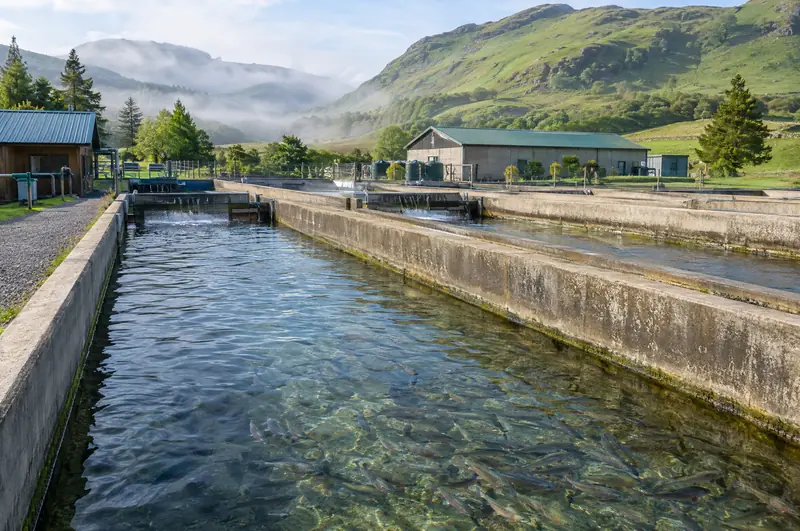
Trout eggs develop according to temperature. Cold water slows everything down; warmer water speeds it up. Hatchery staff track this in degree-days: add up the average water temperature for each day, and the total tells you roughly where the eggs are.
For rainbow trout, published farm figures put hatching at about 100 days at 3.9 °C and about 21 days at 14.4 °C. Both work out at roughly 370 degree-days from fertilisation. US state hatchery figures give about 31 days at 10 °C.
| Water temperature | Approximate time from fertilisation to hatching |
|---|---|
| 3.9 °C | About 100 days |
| 10 °C | About 31 days |
| 14.4 °C | About 21 days |
Eyed ova have already used part of those degree-days before they reach you. We tell you the stage of each batch when it leaves the farm, so you can plan your trays, staff and first feeds.
After hatching, the sac fry (also called alevins) live off the yolk for about 2 to 4 weeks. Across water of 6 to 12 °C, the whole run from fertilised egg to swim-up fry takes about 37 to 83 days. When the fry swim up, starter feeding begins, and that is a job in its own right.
Who eyed ova suit, and who they do not
A good fit
- Trout farms that already hatch their own fish and want another source of eggs.
- Hatcheries supplying fingerlings to dams and fishing venues.
- Training and research set-ups with proper incubation equipment.
Not a good fit
- Dam owners. Eggs cannot be put into a dam to hatch. Buy fingerlings.
- New farmers without incubation running yet. Get the water and equipment proven first, ideally with setup consulting.
- Anyone without someone on site every day during incubation and swim-up.
What you need in place
Eggs and fry are the most demanding stage of trout farming. Published farm guidance asks for:
- Oxygen. Near saturation is ideal, with an acceptable minimum of 5 to 6 mg/L during egg incubation and early fry.
- pH. A narrow range of 6.5 to 8 for eggs and fry. Older fish tolerate more.
- Steady, clean, cold flow. Silt and sudden temperature swings are the enemy of eggs.
- Starter feed and a routine. Swim-up fry are fed often, with starter feed at about 10% of body weight a day for the first 2 to 3 weeks.
From hatching to first feed
Buying ova means you take on the stages that cause most losses in a hatchery, so it helps to know what is coming before you order.
Hatching and the sac fry stage
Once the eggs hatch, the sac fry lie quietly on the bottom and live off the yolk. Swim-up usually follows about 10 to 14 days after hatching, although cold water stretches this out. This is the time to keep light low, flow steady and disturbance to a minimum, and to remove dead eggs and shells before fungus spreads.
Swim-up and starter feeding
When the fry rise and start looking for food, feeding begins. Hatchery guidance has swim-up fry fed 6 to 10 times a day for about 8 to 10 weeks, after which they are called fingerlings. Starter pellets are rich, at about 50% protein and 12 to 15% fat, and oxygen demand rises considerably during and after each feed. Overfeeding fouls the water quickly at this stage.
Moving on
Fry are usually moved to outdoor grow-out at about 8 to 10 cm. From swim-up, published farm figures put fry to fingerling at a further 3 to 4.5 months with adequate feed in water of 5 to 15 °C.
If those weeks sound like more than you want to manage, that is a sound reason to buy fingerlings instead.
How ordering works
Tell us about your set-up
Your incubation equipment, water source and temperature, and how many eggs you want to lay down.
We agree the dates
Eggs are only available in the breeding season, so dates are booked in advance. We confirm the batch and expected stage on dispatch.
Packed cold for the trip
Eyed ova travel chilled and packed for the journey. Collection or delivery is timed to keep the trip short.
Temper and lay down
Let the eggs come slowly to your water temperature before they go into the trays, then remove dead eggs regularly to keep fungus down.
Check the rules before you hatch trout
Rainbow and brown trout appear on the national Alien and Invasive Species Lists, 2020, but Notice 115 of 2021 excluded the trout listings from coming into force "until further notice". Provincial rules on trout still apply. In Mpumalanga, the Mpumalanga Tourism and Parks Agency has said that selling and stocking live trout needs a permit except in dams not connected to rivers. Confirm with your provincial conservation authority what you need to receive ova and grow trout. This is current guidance to confirm, not legal advice.
What drives the price and timing
- Quantity. Larger orders usually work out cheaper per egg.
- Timing. Eggs exist only in the breeding season, and early bookings get first choice of dates.
- Packing and transport. Distance and whether you collect or we deliver.
Ask about eyed trout ova and we will send the current price and the dates we can offer.
Ova or fingerlings?
Ova cost less per fish, but you carry the risk and the work of hatching, first feeding and the fry stage. Fingerlings cost more per fish, and those weeks of risk are already behind them. For most buyers, trout fingerlings are the sensible choice. To see every stage laid out, read the trout life cycle, and if you want hands-on hatchery practice first, look at fish farming training.
Questions about buying trout ova
What are eyed trout ova?
Eyed ova are fertilised trout eggs that have developed far enough for the dark eyes of the embryo to show through the shell. They are past the most fragile early stage, which is why hatcheries buy eggs at this point for transport. From here the eggs hatch into sac fry, which live off the yolk before swimming up to feed.
How long do trout eggs take to hatch?
It depends on water temperature. Rainbow trout eggs take about 100 days from fertilisation at 3.9 °C and about 21 days at 14.4 °C, roughly 370 degree-days. US hatchery figures give about 31 days at 10 °C. Eyed ova are already part of the way there, so the time left in your trays is shorter. We tell you their stage when they leave.
Do you sell brown trout eggs?
Our ova offer is eyed rainbow trout eggs. Brown trout are bred on the farm and sold as fingerlings. If you need brown trout specifically, ask us and we will tell you honestly what we can supply in your season, rather than promise eggs we may not have.
Can I hatch trout eggs in my farm dam?
No. Eggs need clean, steady, cold flowing water, high oxygen and protection from silt and fungus, which a dam cannot give. They are only for hatcheries with incubation trays or troughs and someone to check them daily. For a dam, buy trout fingerlings instead.
Do I need a permit to hatch and grow trout?
The national listing of trout as invasive is not in force, but provincial rules on trout still apply, and a new trout farm can need several authorisations. Check with your provincial conservation authority, in Mpumalanga the Mpumalanga Tourism and Parks Agency, before you order. Our setup consulting covers this, but it is not legal advice.