Home / Products and services / Fish farming training
Fish farming training in South Africa, on a working trout hatchery
Learn the daily work of fish farming by doing it: testing water, feeding, checking fish health and harvesting, alongside people who do it every day.
- Fish health checked before every dispatch
- Stocking advice with every order
- You speak to the people who raise the fish
- Delivering to Dullstroom
A fish farming course built around real farm work
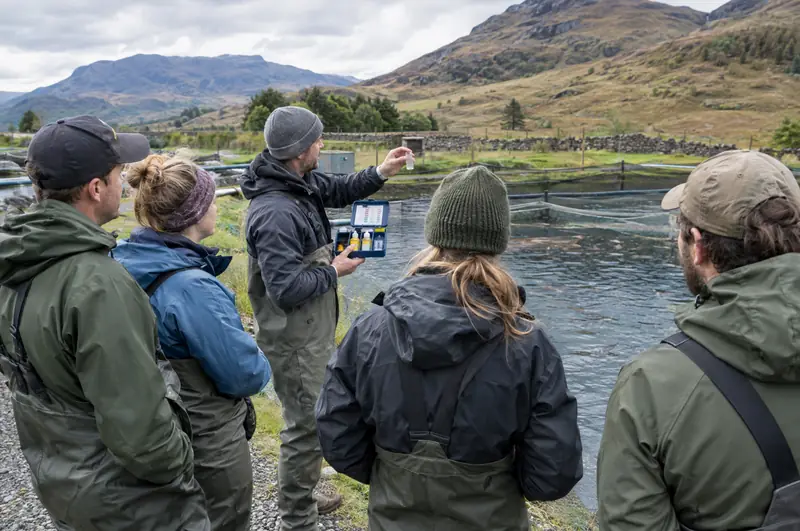
The fish farming training at Stillriver Trout happens on a working hatchery, not in a lecture room. You test water at the same tanks we test every morning, feed fish that are on their way to real customers, and see what healthy and unhealthy fish look like up close.
It is written for people who are thinking about fish farming, people who have just started, and staff on farms that need a solid daily routine. Trout is our speciality, so the course goes deepest on cold-water farming, but the habits it teaches apply to any fish.
Course dates and fees are on request, and groups are kept small so everyone gets hands on the work.
What the course covers
The content runs in six modules. Groups can take all six, or focus on the ones that match their farm.
1. Water quality
The core of fish farming. You learn to measure temperature, dissolved oxygen and pH, and what the readings mean for trout. For example, rainbow trout appetite is best at about 7 to 18 °C, and above about 18 °C the fish eat less and then stop. Oxygen should sit near saturation, with an acceptable minimum of about 4 to 5 mg per litre for older fish. We cover why oxygen drops after feeding, on hot afternoons and in still water, and what to do about it.
2. Feeding
Feed is a cost you pay every day, so feeding well matters to the fish and to the farm's finances. You learn how much and how often to feed by size and water temperature, how to watch fish feeding, and when to hold back. With good practice the feed conversion ratio of trout can be as low as 0.8 to 1. Overfeeding damages water quality, uneaten feed uses up oxygen as it rots, and mouldy feed can kill trout outright.
3. Fish health
How to spot trouble early: fish gasping at the surface at sunrise, fish crowding at the inlet, changes in feeding, colour or swimming. We cover the link between warm water, poor water quality and disease, why higher temperatures make fish more open to many pathogens, and the biosecurity habits that keep problems from spreading between tanks and farms.
4. Hatchery
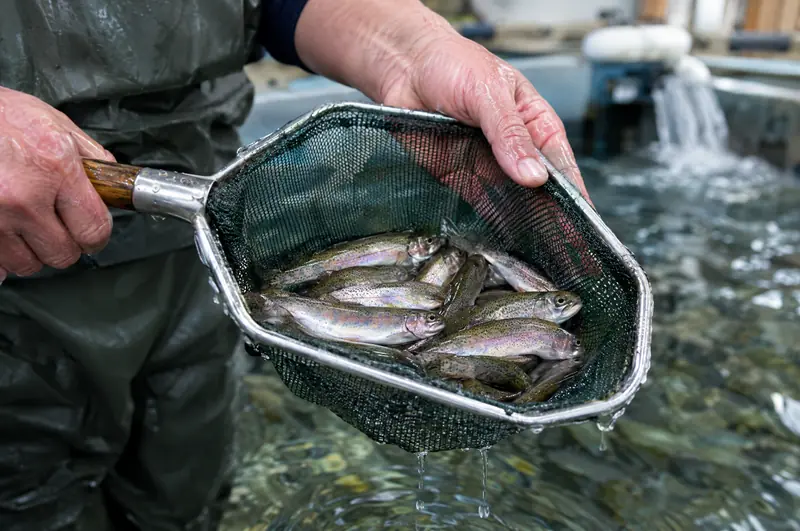
A look at the most delicate part of trout farming: eyed ova in incubation, alevins living off the yolk sac, and swim-up fry learning to feed. You see why eggs and fry need a narrower pH band of 6.5 to 8 and more oxygen than older fish, and why water temperature sets the pace of every stage. Our trout life cycle guide makes good pre-reading.
5. Harvest
Grading fish by size, planning harvest dates, and handling fish so they reach the kitchen in good condition. Fish are starved for 3 days before slaughter, and fresh trout keeps 10 to 14 days on ice when handled well. We show how that shapes delivery schedules for wholesale trout.
6. Business basics
The numbers that decide whether a farm survives: the long gap between stocking and first sales, feed and labour through the months with no income, and who you will sell to. We also cover the permits that apply to trout in South Africa in general terms, and why you must confirm your own position with the authorities before you buy fish.
Fish farming for beginners: who the training suits
The training suits you if you are:
- Thinking about starting a fish farm and want to see the daily work before you commit money.
- A landowner with cold water who is weighing up trout.
- New staff on a trout farm or fishing venue who need to learn the routine properly.
- A dam owner who wants to understand water and feeding well enough to keep stocked trout alive.
It is not the right course if you need an accredited qualification, or if you plan to farm a warm-water species such as tilapia and want species-specific detail. In that case, a provider who farms that fish will teach you more. We would rather say that now than take a booking that does not serve you.
How the training runs
Enquiry
Tell us how many people, their experience, and what you want to farm. We suggest which modules fit.
Dates and fee confirmed
We send the next available dates and the current fee for your group. Small groups book together; a farm's own staff can usually have a session of their own.
On the farm
Training is practical and outdoors. Each module starts with a short explanation, then everyone does the work: taking readings, feeding, checking fish, grading.
Follow-up
You leave with notes and checklists for daily and weekly routines. If you go on to start a farm, the next step is often setup consulting for your own site.
What drives the fee and the dates
We do not publish a fixed course fee because groups differ. The fee depends on the number of people, how many modules you take, and whether the session is open or private to one farm. Dates depend on the farm calendar: hatchery work is easiest to show while eggs and fry are in the building, and harvest is easiest to show on a harvest day. Ask, and we will match the course to what is happening on the farm.
Training, consulting or a farm tour?
These three are easy to confuse. Training teaches you and your staff how to do the work. Setup consulting looks at your site, your water and your permits and gives you a plan. A farm tour is a guided walk for families, schools and the curious, with no hands-on work beyond feeding the fish. If you are only curious, start with a tour. If you are serious, training and consulting together cover both the people and the place.
An aquaculture course you can put to work the next morning
The part of fish farming that is hardest to learn from a book is the routine: what to check first thing, what normal looks like, and what to do when something is off. That is what this training is built to give you.
What you will be able to do afterwards
- Take and record temperature, oxygen and pH readings, and know which ones need action today.
- Set a feeding routine by fish size and water temperature, and adjust it when the water warms.
- Recognise the early signs of oxygen shortage and stress, and respond before fish die.
- Handle, grade and move fish with less stress and fewer losses.
- Temper new fish to a dam or tank so they are not shocked at release.
- Keep simple records that show trends before they turn into problems.
- Ask the right questions about permits, markets and cash flow before you build.
None of this replaces experience on your own water. It does mean your first months on your own farm start from a routine that works, instead of from guesswork.
Questions about our fish farming course
Is this course suitable for complete beginners?
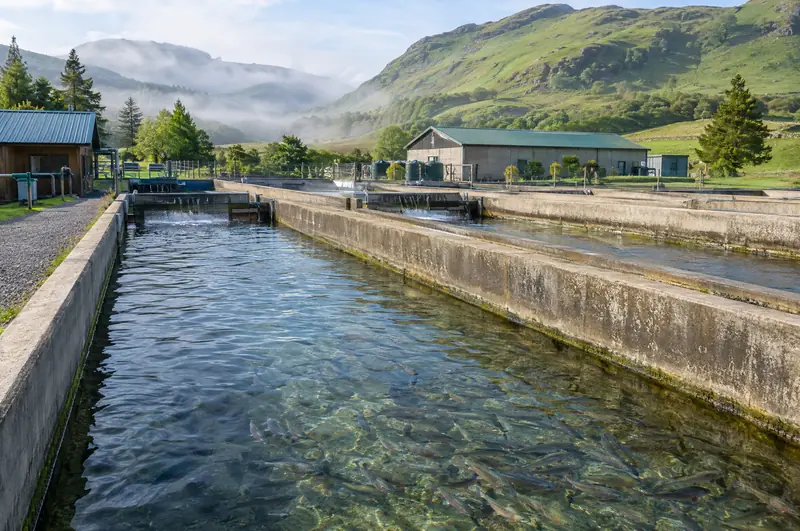
Yes. Most people who join have never worked on a fish farm. We start with why water matters and build up to feeding, health checks and harvest. You do not need a science background. You do need to be comfortable outdoors, on your feet and around water, because most of the course happens beside the tanks, raceways and ponds.
How much does the fish farming course cost?
Fees depend on the group size, whether the course is for one person or a farm's own staff, and how many modules you need. We confirm the current fee and the next course dates on request. Send us an enquiry with how many people would attend and what you want to farm.
Is this an accredited aquaculture course?
No. This is practical, on-farm training, not a formal qualification. If you need an accredited aquaculture course for a job application, a funding requirement or further study, look to a university or an accredited training provider. Many people do both: the formal course for theory, and time on a working farm for the daily routine.
Will this course help me farm tilapia or catfish?
Partly. Water quality, feeding discipline, record keeping and biosecurity apply to any fish. But our farm grows trout, which need cold water, so the species details, temperatures and hatchery work are trout-specific. If you plan to farm a warm-water fish, a course on a farm that grows that species will serve you better.
Can you train our farm staff on our own site?
Ask us. Most training runs at our farm because the hatchery, raceways and ponds are the classroom. For staff on an existing trout farm, we can talk about a follow-up visit to your site to check the routine in your own conditions. That usually pairs well with our setup consulting.
What should I bring to the course?
Closed shoes or boots that can get wet, clothes for the weather, a warm layer and a hat, and a notebook. We supply testing equipment and anything that goes near our fish. For biosecurity, please do not bring your own nets, buckets or boots that have been in another farm's water unless they are clean and dry.