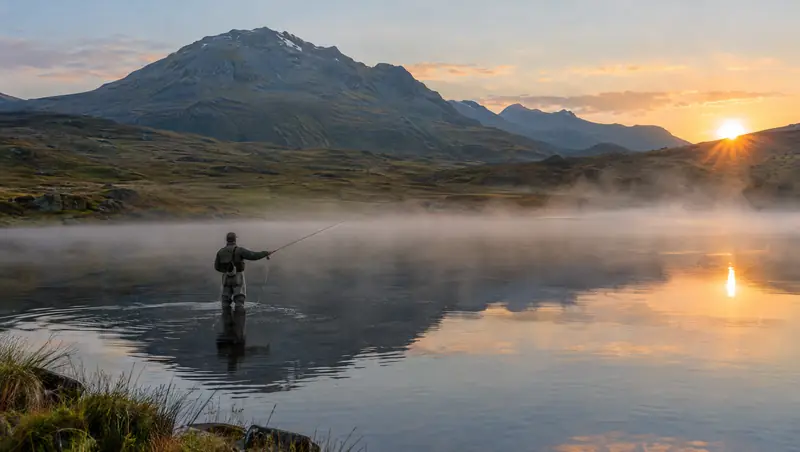
- Fish health checked before every dispatch
- Stocking advice with every order
- You speak to the people who raise the fish
- Delivering to Dullstroom
Why are my fish dying? Start with heat and oxygen
Finding dead trout in a dam is upsetting, and the first question is always why. At Stillriver Trout we get this call most often in late summer, and the answer is usually the same: the water got too warm, the oxygen got too low, or both at once.
Most fish kills in ponds come from low dissolved oxygen. For trout, heat makes it worse in two ways. Warm water holds less oxygen, and trout are cold-water fish with little tolerance for heat. In South African trout farming, water at 25 °C combined with poor water quality brings disease outbreaks and high losses, worst in February and March.
This guide walks through the usual causes, how to tell them apart, what to do today, and how to stop it happening again.
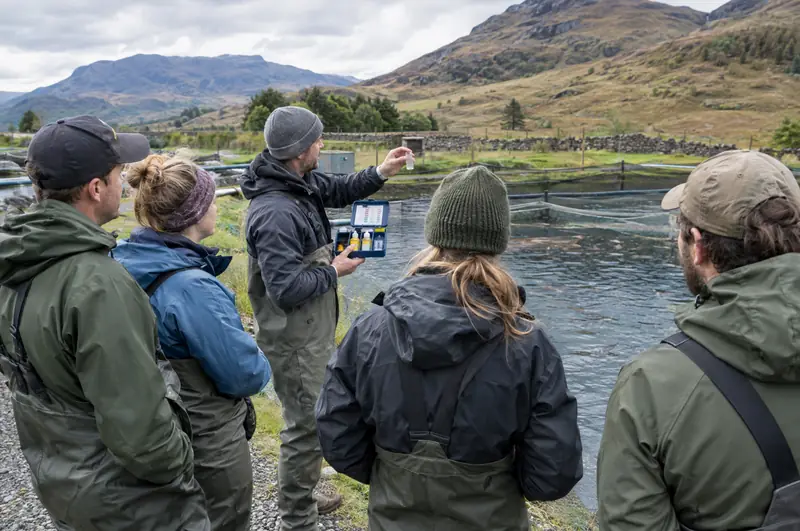
The usual causes of fish dying in a pond or dam
1. Water too warm
Rainbow trout can survive a wide range of temperatures in theory, but water above about 21 °C for more than a few hours can be lethal to them. Brown trout come under stress above about 19.5 °C. Heat also makes fish more open to many diseases and makes pollutants more harmful. Shallow, sunny dams with little inflow are most at risk.
2. Low oxygen
The usual triggers are several cloudy days that cut the oxygen plants produce, high temperatures, overstocking, too much fertiliser, and heavy feeding. Uneaten feed rots and uses up oxygen as it does. Trout generally avoid water below 5 ppm of oxygen when it is warmer than 10 °C, and around 3 ppm adult and juvenile trout start to die.
3. Algae or weed die-off
A sudden die-off of algae or water plants, especially after a herbicide is used, is one of the classic triggers of low oxygen. Decomposing plant matter uses oxygen, the same way rotting feed does, and the fish run short.
4. Turnover
On calm, hot days a dam forms layers: warm water on top, colder water below that runs short of oxygen. A heavy, cold rain or a strong wind can mix the layers suddenly and drop oxygen through the whole dam. A severe mixing event can kill nearly every fish bigger than a few centimetres in a single night.
5. Stocking problems
Temperature shock at stocking is one of the most overlooked causes of losses. Fish moved straight from a transport bag or tank into water of a different temperature are put under serious stress. New fish should be brought to the dam's temperature slowly before release.
6. Bad or excess feed
Mouldy feed will kill trout. Overfeeding damages water quality and uses up oxygen as the leftovers rot.
Best water temperature for trout: rainbow and brown compared
These are published thresholds. Treat them as guides, not guarantees. Laboratory lethal limits can overstate what fish survive in a real dam, because low oxygen, low flow, predators and disease make high temperatures more harmful in practice.
| Threshold | Rainbow trout | Brown trout |
|---|---|---|
| Feeding or growth range | Best appetite at about 7 to 18 °C | Growth between 3.5 and 19.5 °C |
| Best growth | 13 to 15 °C (best growth from feed); 16.5 to 17.2 °C in another published figure | Maximum growth at 13 °C; 10 to 15.5 °C in another published figure |
| Stress begins | Above about 18 °C appetite falls sharply, then stops | Above 19.5 °C is the upper critical range |
| Danger | Above about 21 °C for more than a few hours can be lethal | 25 °C is the seven-day upper lethal temperature for warm-acclimated fish |
| Lethal | 25 to 26.5 °C | 23 to 26.4 °C |
For trout water temperature, the practical rule is simple. If your dam regularly goes above about 21 °C in late summer, rainbow trout are at risk unless they can find a cool, deep layer that still has oxygen. In South Africa, late-summer water temperatures above 20 °C from January to March are one of the main limits on trout farming, so a dam that is fine in October may not be fine in February.
How to tell the causes apart
- Deaths over several hot, still days, mostly the larger fish: heat and low oxygen. Check afternoon water temperature and dawn oxygen.
- Fish gasping at the surface at sunrise, then recovering later in the day: night-time oxygen shortage, often from algae, overstocking or heavy feeding.
- Fish crowding at the inlet: oxygen shortage. The inflow is the only well-oxygenated water.
- Sudden kill of nearly everything overnight after a cold storm or strong wind: turnover.
- A bloom that suddenly cleared or turned brown, then deaths a few days later: algae or weed die-off.
- Deaths within days of stocking, other fish fine: temperature shock or handling stress at release.
- Deaths after opening a new bag of feed: check the feed for mould.
Write down when you found the fish, the weather over the previous few days, and anything you changed, such as new feed, fertiliser or herbicide. That record usually points to the cause faster than anything else.
What to do today
Stop feeding
Feeding raises oxygen demand, and uneaten feed rots. Hold back until you know what is happening.
Add oxygen if you can
Run an aerator, or let fresh, cool water into the dam if you have a supply.
Measure
Take water temperature and, if you can, dissolved oxygen, at dawn and in the late afternoon, near the surface and near the bottom.
Remove dead fish
Take them out so they do not foul the water, and dispose of them away from the dam.
Do not restock yet
New fish put into the same conditions will usually die too. Wait until the cause has passed.
Prevention
- Stock fewer fish. Overstocking is one of the listed triggers for oxygen crashes. Ponds of average fertility produce enough natural food for about 112 kg of trout per hectare, so an unfed dam cannot carry many fish.
- Feed carefully. Feed only what the fish clear quickly, and stop feeding when the water is warm. One published guideline says not to feed when water is above 18.3 to 21.1 °C.
- Use fresh feed. Store it cool and dry and throw out anything mouldy.
- Be careful with herbicides and fertiliser. A sudden algae or weed die-off is a classic trigger.
- Temper new fish. Bring them slowly to the dam's temperature before release.
- Know your dam's summer temperature. Measure it on the hottest afternoons of late summer, at the surface and in the deepest part.
How fast do trout grow?
Slow growth is the quieter cousin of a fish kill, and the causes overlap. Trout grow fastest in cool, well-oxygenated water with enough food.
On a farm with commercial feed at 5 to 15 °C, published stage times are 3 to 4.5 months from fry to a 25 g fingerling, then 4 to 6.5 months from fingerling to a table fish of at least 250 g. Pan-sized fish of 280 to 400 g are usually harvested 12 to 18 months after the start. In a dam, growth depends on how much food the water produces and whether you feed.
Why trout grow slowly
- Water too warm. Above about 18 °C, rainbow trout appetite drops sharply and then stops, and they digest feed less completely.
- Oxygen swings. Large swings in dissolved oxygen reduce feeding and slow growth. Long periods of low oxygen harm fish even when they do not kill them.
- Water too cold. Cold water slows development at every stage, from egg to table fish.
- Too little food. An unfed dam can only support a limited weight of fish. Too many fish means small fish.
With good practice on a farm, trout convert feed efficiently, with a feed conversion ratio as low as 0.8 to 1. In a dam, the best growth comes from fewer fish, cool water and steady oxygen. The full timeline is in our trout life cycle guide.
When to restock
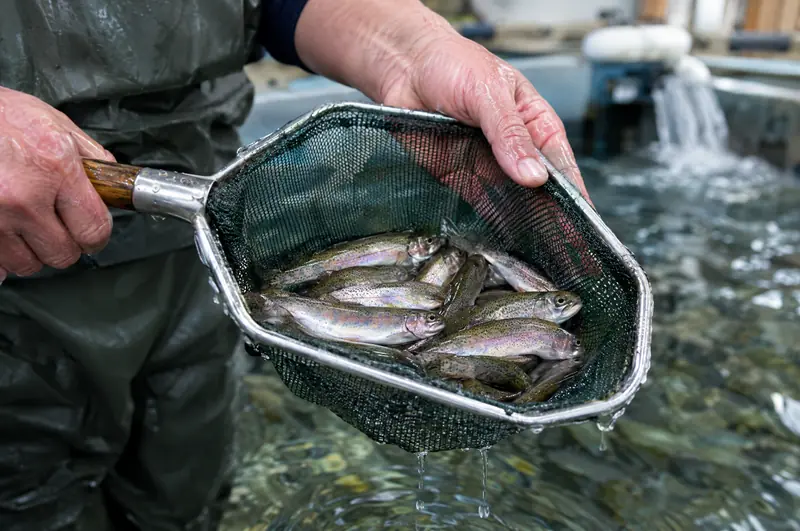
Restock only once you know why the fish died and the cause has passed. Published guidance says trout should be stocked only when water is consistently below about 21 °C, and removed or not stocked before it warms past that. That points to autumn, once the dam has cooled, rather than late summer. One published guideline suggests restocking every two to three years depending on how many fish are taken out.
Before you order trout fingerlings, use the stocking calculator to set a sensible number for your dam. Stocking trout in South Africa is regulated, and in Mpumalanga selling and stocking live trout has been reported to need a permit except in dams not connected to rivers. Confirm what applies to your dam with the authorities.
If your dam runs warm every summer, trout may simply be the wrong fish for it. We would rather tell you that than sell you fish that will not survive February.
Questions about fish dying in ponds and dams
Why are my fish dying in my pond but the water looks clear?
Clear water can still be short of oxygen or too warm. Most pond fish kills come from low dissolved oxygen, and you cannot see oxygen. Trout can also be killed by water above about 21 °C for more than a few hours. Measure temperature and oxygen at dawn and in the late afternoon, near the bottom as well as the surface, before blaming anything else.
What is the best water temperature for trout?
For rainbow trout, appetite is best at about 7 to 18 °C and the best growth from feed comes at 13 to 15 °C. For brown trout, maximum growth is at about 13 °C. Above about 18 °C rainbow trout eat less, and water above about 21 °C for more than a few hours can kill them. The table on this page sets out both species.
Why do fish die after heavy rain?
On calm, hot days a dam can form layers, with warm water on top and cold, oxygen-poor water below. A heavy, cold rain or a strong wind can suddenly mix those layers and drop oxygen through the whole dam. A severe mixing event, called turnover, can kill nearly every fish bigger than a few centimetres in a single night.
Why are my trout gasping at the surface?
Fish gasping at the surface at sunrise are an early warning of low oxygen, often after cloudy weather, hot nights, heavy feeding or too many fish in the water. Stop feeding, add fresh cool water or aeration if you can, and measure oxygen. Trout crowding at the water inlet is another sign of oxygen shortage.
Can I put more trout in after a fish kill?
Not until you know why the first fish died and the cause has passed. If it was heat, wait until the water is consistently below about 21 °C. If it was an algae crash or turnover, wait for oxygen to recover and stay stable. Restocking into the same conditions usually loses the new fish too. Check numbers with our stocking calculator.
How many trout can my dam hold?
Fewer than most people think, especially if you do not feed them. One guideline puts the natural food in a pond of average fertility at enough for about 112 kg of trout per hectare. Overstocking is a common trigger of oxygen crashes. Our stocking guide explains how surface area, depth and water source change the answer.