Home / Products and services / Trout fingerlings
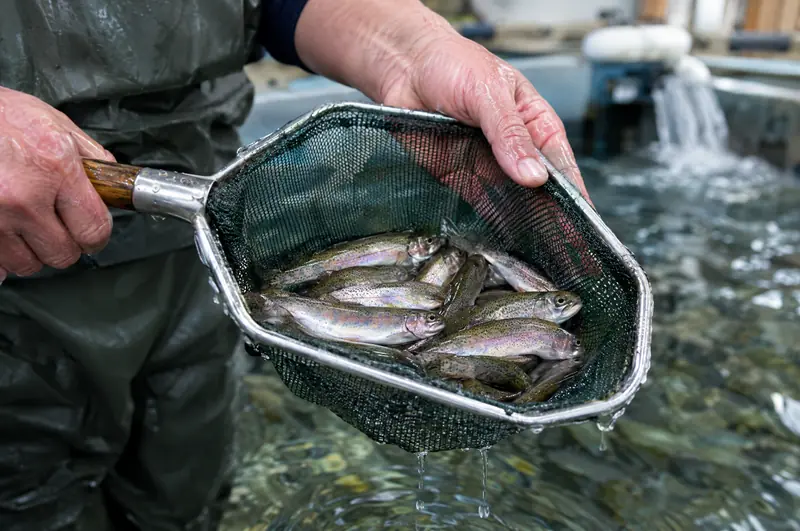
Trout fingerlings for sale: rainbow and brown trout for dams, venues and farms
Young rainbow and brown trout bred in cold Highlands spring water, delivered with plain advice on whether, when and how many to stock.
- Fish health checked before every dispatch
- Stocking advice with every order
- You speak to the people who raise the fish
- Delivering to Dullstroom
Trout for sale as fingerlings, bred here from the egg
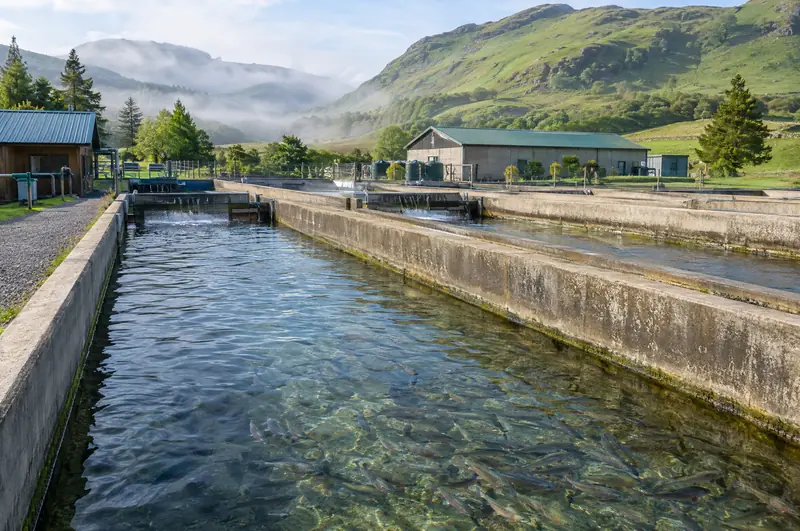
Stillriver Trout breeds rainbow and brown trout in cold spring water near Dullstroom and sells the young fish to dam owners, fly fishing venues and grow-out farms. If you want to buy trout fingerlings, you get fish that hatched and grew in Highlands water, plus a straight answer about whether your water can hold them.
Most of the trout for sale online in South Africa is table fish for the kitchen. This page is about live fish for stocking. If you are after fresh fish for a restaurant or shop, see fresh trout wholesale instead.
Rainbow trout fingerlings
Rainbow trout are the workhorse fish for farm dams and grow-out. Their appetite is best at roughly 7 to 18 °C, and the best growth from feed comes between 13 and 15 °C. Above about 18 °C their appetite falls sharply and then stops, and water above about 21 °C for more than a few hours can kill them.
That still makes them the more forgiving of the two species. They suit most cool Highlands dams, fed put-and-take fisheries, and anyone who wants fish to grow on to table size.
Brown trout fingerlings
Brown trout fingerlings are for colder water. Brown trout grow between about 3.5 and 19.5 °C, with the fastest growth around 13 °C. Above 19.5 °C they are in what fish scientists call the upper critical range, where the population comes under stress. They also need well oxygenated water.
So brown trout make sense in deep, spring-fed or stream-fed dams that stay cold through summer, and for anglers who want a wary, harder fish to catch. In a dam that warms up in February, they are the first to suffer.
What the size options mean
Trout are sold by stage, and the stage you buy decides how quickly you see fish of a useful size and how many survive the first months. We list the sizes we have on the quote, because what is available changes through the year as each batch grows.
Fry and small fingerlings
The youngest fish we sell. On farm guidance, fry are around 5 cm. They are the cheapest per fish and travel well in numbers, but they are small enough for birds and larger fish to eat, and they need clean, cool, well oxygenated water. They suit grow-out farms with tanks or raceways more than open dams.
Fingerlings
The usual choice for stocking a dam. Farm guidance treats a fingerling as a fish of roughly 12.5 cm. At this stage the fish are past the most delicate weeks, can find natural food, and have a better chance against predators. Most dam and venue orders are fingerlings.
Larger stocking fish
For venues that want fish to catch soon after stocking, we can quote on bigger fish when we have them. They cost more each and you need fewer, but they need more oxygen, more careful transport and a dam that stays cool.
Not sure which stage fits? Tell us what you want from the dam: fish to catch this season, a fishery that builds up over time, or fish to grow on and harvest.
Who should not buy trout
Trout are cold-water fish, and the most common way to lose money on them is to stock water that gets too warm. We would rather lose the sale than sell you fish that die in February.
- Shallow, sunny, still dams. In South African trout farming, water of 25 °C together with poor water quality brings disease and heavy losses, worst in February and March. Shallow dams heat up fastest.
- Dams with no cool refuge. Pond guidance says water that stays below about 21 °C may support trout if dissolved oxygen stays above 5 parts per million. Without a deep, cool layer or a cold inflow in summer, trout are likely to die.
- Dams that go green and then crash. Most fish kills come from low oxygen, often after an algae die-off, several cloudy days or a hot spell. See why trout die in dams.
If your dam is warm, ask us about a warm-water species from another supplier. That is a better result than a dam of dead trout.
How delivery and acclimatisation work
Tell us about your water
Surface area, deepest point, where the water comes from, and whether you will feed. A photo helps. Use the stocking calculator for a starting number.
We check the fit and quote
We confirm species, stage and numbers, and tell you if we think your dam is marginal. The quote covers fish, packing and delivery.
Fish are checked and packed
Every batch is checked before dispatch. If fish are not ready, we say so in writing and move the date.
Delivery in the cool part of the day
We plan the run so the fish spend as little time travelling as possible and arrive when your water is at its coolest.
Temper before release
Float the bags or tank in the dam and mix in dam water slowly until the temperatures are within a few degrees of each other. Temperature shock at stocking is one of the most overlooked causes of loss.
Go easy on feed
Feed lightly and only good, dry feed. Mouldy feed can kill trout, and uneaten feed rots and uses up oxygen. Do not feed when the water is warmer than about 18 °C.
Trout stocking in South Africa is regulated
Rainbow trout and brown trout are listed on the national Alien and Invasive Species Lists, 2020. However, Notice 115 of 2021 excluded those trout listings from coming into force "until further notice", so the national invasive species permits do not currently apply to trout.
Provincial rules still apply. In Mpumalanga, the Mpumalanga Tourism and Parks Agency has said that selling and stocking live trout requires a permit, except in dams that are not connected to rivers. Permits have applied both to suppliers and to the people receiving the fish. Check with the Mpumalanga Tourism and Parks Agency before stocking. This is our understanding of current guidance, not legal advice.
What drives the price and timing
We do not publish a fixed price list for live fish, because the same order can cost very differently depending on a few things:
- Species. Rainbow and brown trout are bred and grown separately, and availability of each differs through the year.
- Stage and size. Bigger fish have been fed and housed for longer, so each one costs more, but you need fewer.
- Numbers. Larger orders spread the packing and transport cost.
- Distance and access. A dam at the end of a long farm track needs more time and more careful packing than one beside a tar road.
- Season. We stock when water is cool, so autumn and winter dates fill first. Book early if you have a deadline such as the start of a fishing season.
Ask for a fingerling quote and we will give you the current price for your order, with delivery.
Fingerlings, eyed ova or table fish?
Fingerlings are the right buy for almost every dam owner and fishing venue: the risky early stages are done and the fish go straight into your water.
Eyed trout ova are cheaper per fish but only make sense if you run your own incubation set-up with a steady flow of cold, clean water. If you are thinking about building that, start with trout farm setup and our fish farming training.
If you want to eat trout rather than stock it, see fresh trout wholesale or smoked trout. And if you would rather catch them than keep them, there is fly fishing at the farm.
Questions about buying trout fingerlings
How fast can trout grow?
With adequate commercial feed in water of 5 to 15 °C, published farm figures put fry to fingerling at 3 to 4.5 months, and fingerling to table fish of at least 250 g at a further 4 to 6.5 months. In an unfed dam growth depends on natural food and is slower. Warm water also slows growth, because rainbow trout eat far less above about 18 °C.
Should I stock rainbow or brown trout fingerlings?
For most farm dams and grow-out farms, rainbow trout are the practical choice: they tolerate a wider temperature range and grow well on feed. Brown trout suit water that stays cold all year, such as deep spring-fed or stream-fed dams. If your dam warms up in late summer, brown trout are the riskier choice. Tell us about your water and we will say which fits.
How many trout fingerlings should I put in my dam?
It depends on surface area, depth, inflow and whether you will feed. International pond guidance runs from a few hundred fish per hectare for unfed water to over a thousand per hectare for fed water, but none of it is a South African rule. Start with the stocking calculator, then we will check the number against your dam before quoting.
Do I need a permit to buy and stock trout in Mpumalanga?
Possibly. The national listing of trout as invasive is not in force, but provincial rules still apply. The Mpumalanga Tourism and Parks Agency has said that selling and stocking live trout needs a permit except in dams not connected to rivers. Check with the agency before stocking. We will tell you what we understand applies, but this is not legal advice.
When is the best time to stock trout?
Stock when your water is consistently cool. US extension guidance says to stock only when water stays below about 21 °C, because water above that for more than a few hours can be lethal to rainbow trout. In South African trout country, late summer from January to March is the warm, risky period, so autumn and winter stocking is usually the safer plan.
Do you deliver trout fingerlings?
Yes. We deliver live fish across the Mpumalanga Highlands, timed so the fish spend as little time in transport as possible and arrive in the cooler part of the day. For dams further away, ask us first: distance changes how fish must be packed and whether the trip is sensible at all. Delivery cost is part of the quote.