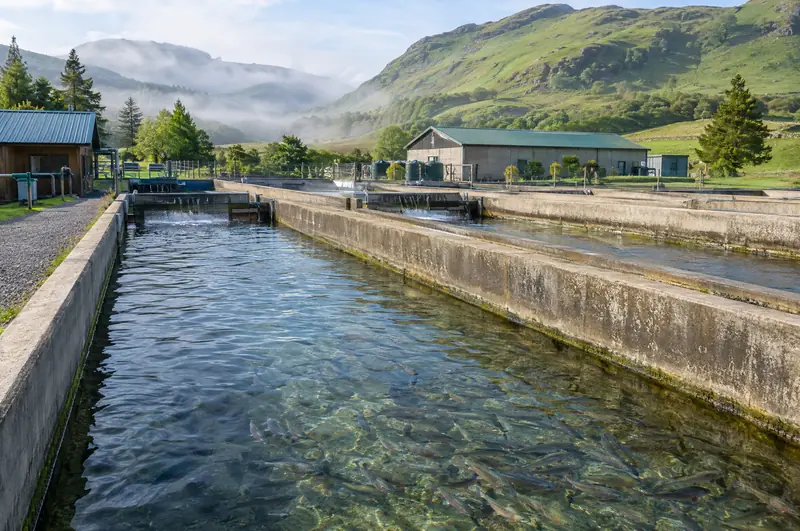
Home / Products and services / Trout farm setup
Trout farming in South Africa: setup consulting from a working hatchery
Before you buy a single fish, find out whether your water, your permits and your cash flow can carry a trout farm. We help you answer all three.
- Fish health checked before every dispatch
- Stocking advice with every order
- You speak to the people who raise the fish
- Delivering to Dullstroom
Start a trout farm with the hard questions answered first
Most people who ask Stillriver Trout about trout farming in South Africa start with tanks, fish or a business plan. We start with the water, because the water decides almost everything that follows: which fish survive the summer, how many you can hold, and whether a trout farm on your land makes sense at all.
Our setup consulting is for people who want to start a trout farm, add trout to land they already farm, or rescue a small farm that is not working. You get a working hatchery's view of your site, not a generic business plan template.
What you get
- A site visit to walk your water source, the fall of the land and where ponds or raceways could go.
- Water testing for temperature, oxygen and pH, with a plan for testing again in late summer.
- A written plan: what to build, what size to start at, and what the first year looks like month by month.
- Help understanding and preparing the permits that apply to your site.
- Support at your first stocking, so the first fish go in well.
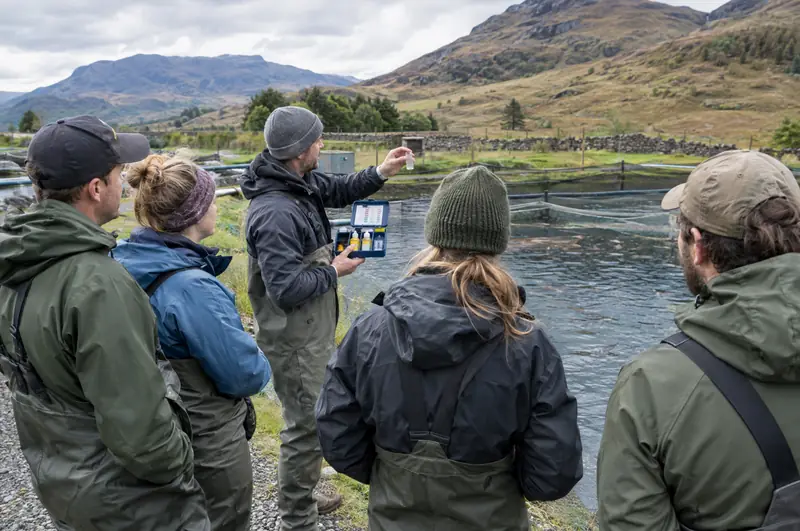
Water: temperature, oxygen and pH
Trout are cold-water fish, and on a farm the margins are tighter than on paper. These are the numbers we test your water against.
Temperature
Rainbow trout can survive water from 0 to 27 °C, but survival is not farming. The optimum for culture is below 21 °C, and site selection guidance looks for water in the 12 to 21 °C range. Appetite is best at about 7 to 18 °C. Above about 18 °C, rainbow trout eat less and then stop eating. The best growth from the feed you pay for comes between 13 and 15 °C.
Heat is where farms get hurt. Water above about 21 °C for more than a few hours can kill rainbow trout. In South African trout farming, water at 25 °C combined with poor water quality brings disease outbreaks and high losses, worst in February and March. That is why a single reading in winter tells you very little. We want to know what your water does on the hottest afternoons of late summer.
Oxygen
Dissolved oxygen should sit near saturation. The acceptable minimum is about 5 to 6 mg per litre for eggs and early fry, and about 4 to 5 mg per litre for older fish. Around 3 mg per litre, trout start to die. Oxygen demand rises sharply during and after feeding, so a site that tests fine at dawn can run short at midday once the fish are fed.
pH and flow
A pH of 6.5 to 8.5 suits growing fish. Eggs and fry need a narrower band of 6.5 to 8. For flow, a common guide is about 1 litre per minute for every kilogram of trout without aeration. Multiply that by the weight of fish you plan to carry and the flow needed, day and night, adds up fast. Flow, more than land, usually sets the size of a trout farm.
If your water runs warm in late summer, or your flow drops in a dry winter, the honest answer may be a smaller farm, a different species, or no farm. We would rather tell you that before you build.
Fish farming in South Africa: why trout is different
Most searches for fish farming in South Africa are about tilapia and catfish, and most beginner material is written for those fish. Trout is a different business. It needs cold, clean, flowing water every day of the year, which limits where it can be done. South African trout farms sit where cool mountain streams run, mainly in the Western Cape and inland Mpumalanga, and the industry's growth has been held back by water availability and by late-summer water temperatures above 20 °C from January to March.
The industry is small and mostly made up of family businesses. One count found 47 operational trout farms producing 1,522 tonnes in 2013, with only a handful producing more than 20 tonnes. Back in 2008, Mpumalanga produced about 700 tonnes from 14 farms, supported by local feed, hatchery, equipment, veterinary and processing services. A 2021 study described national production as stagnant at under 2,000 tonnes a year while demand exceeds local supply. More recent public remarks put the freshwater trout total at just over 1,000 tonnes.
Read that two ways. There is room for well-sited farms. And the reason there are not more of them is that good trout water is scarce.
Permits for a trout farm
Trout farming and trout stocking in South Africa are regulated, and the rules have shifted over the years. Here is what we can say with confidence, and where you need to check.
National listing. Rainbow trout and brown trout appear as Category 2 species on the national list of invasive freshwater fish in the Alien and Invasive Species Lists, 2020, under the National Environmental Management: Biodiversity Act. However, Notice 115 of 2021 brought those lists into effect on 1 March 2021 while excluding the two trout listings, which do not take effect until further notice in the Government Gazette.
Provincial rules. Trout remain regulated by the provinces. In Mpumalanga, the provincial parks agency has been reported as saying that selling and stocking live trout needs a permit everywhere except dams that are not connected to rivers. Reports say both those who produce or transport live trout and those who receive them need permits, and the permit system has changed more than once in recent years.
Water use. Your right to take and return water is a separate question from fish permits. Ask the authorities what applies to your site.
This is general information, not legal advice. Confirm with the authorities what applies to your farm before you buy fish or build.
Our part is practical: helping you understand which questions to ask, preparing the site information officials usually want to see, and timing your first stocking around the permit you hold.
The long gap before your first harvest
Cash flow sinks more new trout farms than disease. Feed, power, labour and testing start the day the fish arrive, and sales start much later. Using published stage times at 5 to 15 °C with good commercial feed:
- Egg to swim-up fry: about 37 to 83 days at 6 to 12 °C.
- Swim-up to fry of 5 cm and 2 g: 1.5 to 3 months.
- Fry to fingerling of 12.5 cm and 25 g: 3 to 4.5 months.
- Fingerling to table fish of at least 250 g: 4 to 6.5 months.
Pan-sized fish of 280 to 400 g are usually harvested 12 to 18 months after the start. Colder water stretches every stage. Starting with fingerlings cuts out the hatchery months, which is one reason most first farms do it that way. The full timeline is on our trout life cycle guide.
How setup consulting works
Site visit
We walk the water source, the dams or stream, the slope of the land and access for feed and fish deliveries. You tell us what you want the farm to do: table fish, fingerlings for dams, a fishing venue, or a mix.
Water testing
We test temperature, dissolved oxygen and pH, and measure flow where we can. If the visit is in a cool month, we set up late-summer readings, because that is when sites fail.
Plan
You get a written plan: layout, starting size, stocking schedule, feed and labour needs, and a month-by-month view of the first year, including the months with no income.
Permits support
We help you work out which permits apply, gather the site details, and line up the timing so fish are not ordered before you are allowed to receive them.
First stocking
We are there, or on the phone, for the first delivery: tempering the fish to your water, checking oxygen, and setting the feeding routine for the first weeks.
Who it suits, and who it does not
Setup consulting suits landowners with a cold, reliable water source, people buying land for a trout farm who want it checked before they sign, and existing farmers adding trout to a mixed operation. It also suits fishing venue owners who want to raise some of their own fish.
It is not the right fit if your water runs warm through late summer, if you need income within the first few months, or if you only want trout in a farm dam for your own fishing. For a dam, our stocking guide and calculator will answer most questions, and we can supply the fingerlings.
What drives the cost and timing
We quote per site. The main drivers are distance to your property, how many visits and testing rounds the site needs across the seasons, the size and complexity of the plan, and how much permit preparation is involved. A site visited in winter usually needs a second round of readings in late summer, which sets the earliest date for a final go or no-go. Ask for a setup quote and tell us where the site is.
Consulting, training or both?
Consulting is about your site. Fish farming training is about your people: it puts you or your staff on a working hatchery to learn feeding, water checks, health and harvest by doing them. Many new farmers do the training while the plan and permits are in progress, so they are ready when the first fish arrive. If you plan to run your own hatchery later, read about eyed trout ova and what incubation demands.
Questions about starting a trout farm
Is trout farming profitable in South Africa?
It can be, but only on the right site. A 2021 study found local demand for trout exceeds supply, while production has stayed flat because few sites have cold enough water. Profit depends on summer water temperature, your market, and whether you can carry costs through the long months before the first harvest. That is exactly what a site visit and plan are meant to test.
How much does it cost to start a trout farm?
There is no honest single figure. The cost depends on whether you already have water and land, how much earthworks and plumbing the site needs, the size you start at, and how many months of feed and labour you must fund before first sales. Our plan sets out those costs for your site. Ask for a setup quote.
Do I need a permit to farm trout?
Most likely, yes, in some form. The national invasive species listing for rainbow and brown trout is not yet in force, but trout remain regulated by the provinces. In Mpumalanga, selling and stocking live trout has been reported to need a permit except in dams not connected to rivers. Confirm what applies to your site with the authorities before you buy fish.
How long before my first harvest?
Longer than most people expect. Published stage times add up to many months between egg and a 250 g table trout, and pan-sized fish of 280 to 400 g are usually harvested after 12 to 18 months. Cold water slows every stage. Starting from fingerlings shortens the wait but not the summer risk.
Can I farm trout anywhere in South Africa?
No. Trout need cold, well-oxygenated water all year, and South African trout farms are found where cool mountain streams run, mainly in the Western Cape and inland Mpumalanga. Late-summer water above 20 °C is one of the main limits on the industry. If your water runs warm from January to March, trout are probably the wrong fish.
Should I start with ova or fingerlings?
Most new farms do better starting with fingerlings. Hatching ova needs very clean water, a narrow pH range and higher oxygen than older fish, plus daily skill. Fingerlings let you learn grow-out first. Once the farm runs well, you can add a hatchery. See fingerlings and eyed ova.