Home / Products and services / Farm tours
A working trout farm near Dullstroom, open for guided tours
See how trout grow from tiny eggs to table fish, walk the raceways and feed the fish yourself. Tours run by booking for families, schools and groups.
- Fish health checked before every dispatch
- Stocking advice with every order
- You speak to the people who raise the fish
- Delivering to Dullstroom
What you see on a trout farm tour
Most trout farms are closed to the public. At Stillriver Trout Breeding Centre near Dullstroom, guided tours let you walk through a working hatchery and see every stage of a trout's life on one farm, from eggs smaller than a pea to fish ready for the kitchen.
A guide walks with your group the whole way, explains what is happening at each stop, and answers the questions people always ask: how many eggs one fish lays, how long they take to hatch, and why trout need such cold water.
The hatchery
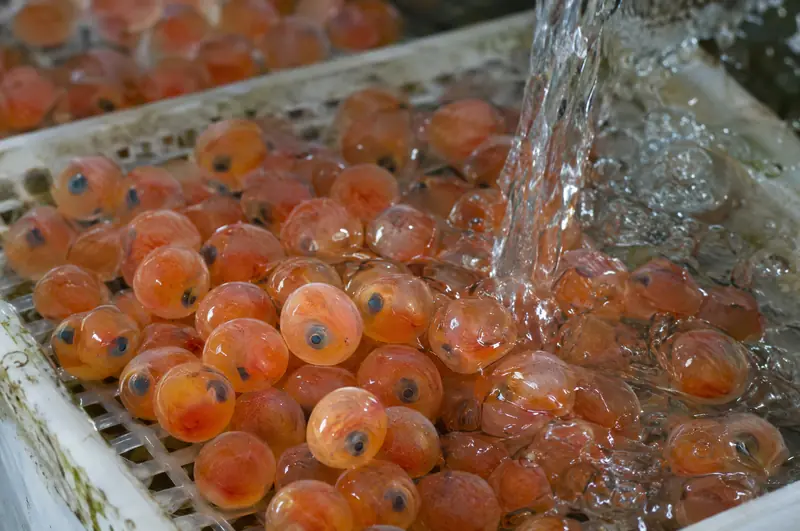
Inside, eyed ova sit in incubation trays with cold water running over them. You can see the dark eyes through the shell. Rainbow trout eggs are only 3 to 7 mm across, and a female can produce up to 2,000 eggs per kilogram of her body weight. In season you may also see alevins, newly hatched fish still carrying their yolk sac.
The raceways
Outside, young fish grow in long channels fed by cold spring water. This is where you see why water matters so much: the flow, the temperature checks and the daily routine that keeps oxygen high.
The ponds
Larger fish grow on in the ponds, some heading to dams and fishing venues as fingerlings, some to restaurants as table fish.
Feeding the fish
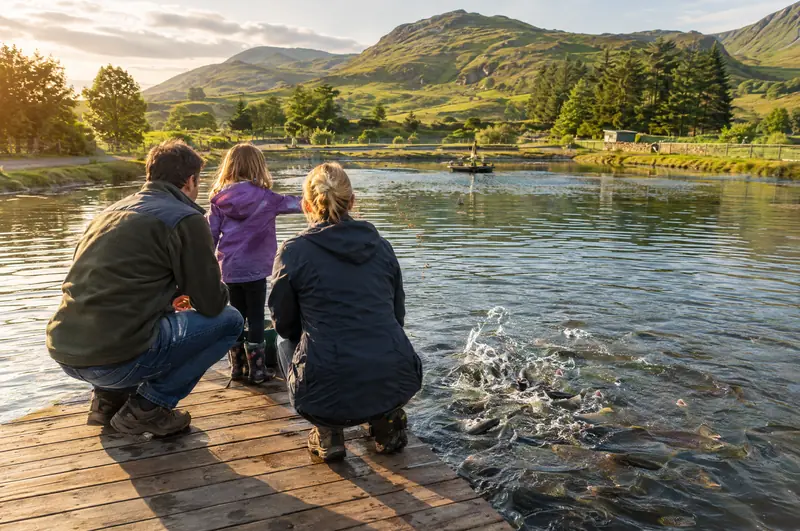
The tour ends with feeding. Throw a handful of pellets and the water boils with trout. It is the part children remember, and usually the adults too.
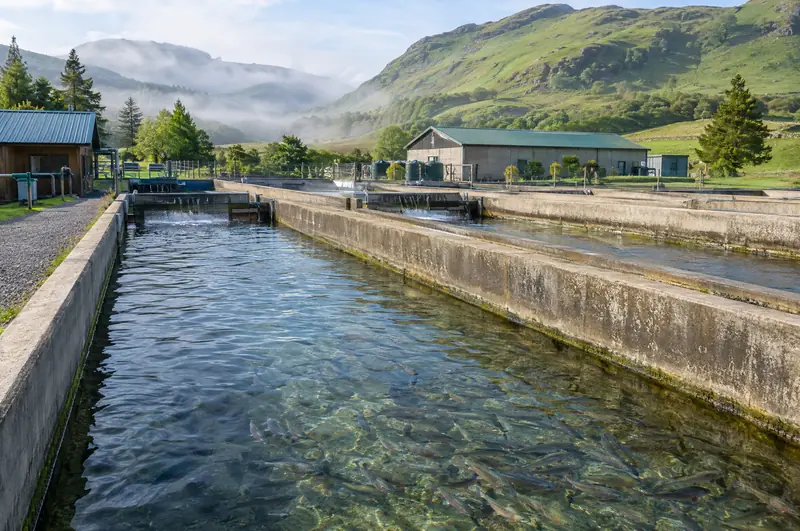
A trout farm in the Dullstroom highlands
Dullstroom sits about 35 km north of Belfast (eMakhazeni) at roughly 2,100 m above sea level, and is often described as the highest town in South Africa. It is one of the country's best-known fly fishing destinations, and the cold highland water that draws anglers is the same water that makes trout farming possible here.
The weather is part of the visit. Most rain falls between October and April, and winter mornings are often close to freezing. Bring a warm layer whatever the season, and a rain jacket in summer.
Many visitors pair a tour with a few hours on the water. See fly fishing at Stillriver if you want to add an outing to the same day.
Tours for schools and groups
A trout farm is a living science lesson. In one visit, learners see eggs, newly hatched fish, young fish and adults, and connect them into a full trout life cycle. They also see how water temperature and oxygen decide whether fish thrive, which ties into lessons on the environment and on farming.
Schools
Tell us the grade, the size of the group and what the class is studying. The guide pitches the talk to match, and teachers can ask for a focus on life cycles, water, or farming as a business. We ask for enough adults to supervise around open water.
Clubs, companies and private groups
Fly fishing clubs, farming study groups, company outings and family gatherings all book tours. Groups thinking about starting their own farm often find the tour a useful first step before fish farming training.
Who a tour does not suit
The farm is outdoors, with gravel paths, wet ground and open water. It is not a theme park and there is no guarantee of seeing every stage on every date, because the hatchery follows the fish, not the calendar. If you need step-free access throughout, tell us when you book so we can say honestly which parts of the farm you can reach.
Biosecurity rules for visitors
Fish diseases spread easily on boots, nets and water. These rules protect our fish and the dams and rivers our fish go to, so we ask every visitor to follow them.
- Arrive with clean, dry footwear. If you have been on another fish farm or fishing water in the last few days, tell us, and use the footbath where the guide shows you.
- Do not bring your own nets, buckets, waders or fishing gear onto the farm unless they are clean and dry.
- Do not put hands or objects into tanks, raceways or ponds unless the guide invites you to.
- Never move water, fish or eggs between tanks.
- Stay on the paths, keep children close, and leave pets at home.
- Feed only the pellets we hand out. Bread and other food fouls the water.
None of this is meant to make the visit stiff. The guide will tell you at each stop what you can touch and where you can stand.
How booking works
Send an enquiry
Use the booking form or WhatsApp. Give your preferred dates, the size of the group, the ages of any children, and whether you want to add fly fishing.
We confirm
We reply with available times, the current price for your group, and directions to the farm.
On the day
Arrive a little early, meet your guide at the farm office, and follow the biosecurity steps before you walk in.
What drives the price
We confirm the price when you book. It depends on the size of the group, whether it is a school, club or private family group, and whether you add extras such as a fishing session or a smoked trout tasting.
Message us on WhatsApp or use the booking form to start a booking.
What you learn on the way round
A tour is a walk, not a lecture, but most visitors leave knowing far more about trout than they expected. A few of the things the guide covers:
- Why the water is so cold. Rainbow trout feed best at about 7 to 18 °C, and above about 18 °C they eat less and then stop. Water above about 21 °C for more than a few hours can kill them, which is why trout farms sit where the water stays cool.
- Why the eggs take so long. Rainbow trout eggs take about 100 days to hatch at 3.9 °C and about 21 days at 14.4 °C. Colder water, longer wait.
- Why oxygen matters. Trout need water close to fully saturated with oxygen, and they use more of it during and after feeding. You will see how the raceways keep it high.
- How long a table fish takes. Pan-sized trout are usually harvested 12 to 18 months after the start, which surprises most people who buy trout in a shop.
Looking for a trout farm near me?
If you searched for a trout farm near you and you are in the Mpumalanga Highlands, we are close to Dullstroom. If you are further away, the cold water that trout need means farms are only found in certain parts of the country, mostly where cool mountain streams run. Many families from Gauteng make a weekend of it, with a tour in the morning and a fishing session afterwards.
If you cannot visit, you can still taste the farm: we deliver smoked trout and fresh trout to Mbombela, Johannesburg and Pretoria on scheduled runs.
Questions about visiting the trout farm
Can I just drop in to see the trout farm?
Please book first. Tours run by booking only, because the hatchery and raceways are a working farm with daily routines, and biosecurity matters. Booking also means a guide is free to walk with you and answer questions. Send us a message with your preferred date and the size of your group, and we will confirm a time.
Are farm tours suitable for young children?
Yes, with an adult keeping close watch. Children usually enjoy the feeding most. The farm has open water, raceways and wet, slippery edges, so young children must be supervised at all times and stay on the paths. Prams can be awkward on some gravel paths, so a carrier works better for babies.
Do you offer school trips to the trout farm?
Yes. School groups see the whole life cycle in one visit, from eyed eggs to table fish, and the guide adjusts the talk to the grade. Teachers can ask for the tour to focus on life cycles, water and the environment, or farming as a business. Tell us the grade and group size when you book.
How much does a farm tour cost?
Ask us for the current rate when you book. The price depends on the size of the group, whether it is a school or private group, and whether you add fly fishing or a smoked trout tasting to the day. We confirm the price with your booking, so there are no surprises on the day.
Can we buy trout at the farm after the tour?
Ask when you book, and we will tell you what is available on your date. Many visitors like to take home smoked trout. If you want a larger order, or fresh trout for an event, arrange it in advance through our smoked trout or fresh trout pages.
Is there a trout farm near me in Gauteng?
Our farm is in the Mpumalanga Highlands near Dullstroom, not in Gauteng. Trout need cold water, so farms sit where the water stays cool. Many Gauteng visitors combine a farm tour with a weekend in the Highlands. If you cannot visit, we still deliver fresh and smoked trout to Johannesburg and Pretoria on scheduled runs.